
Perfection - The Endless Pursuit of Better

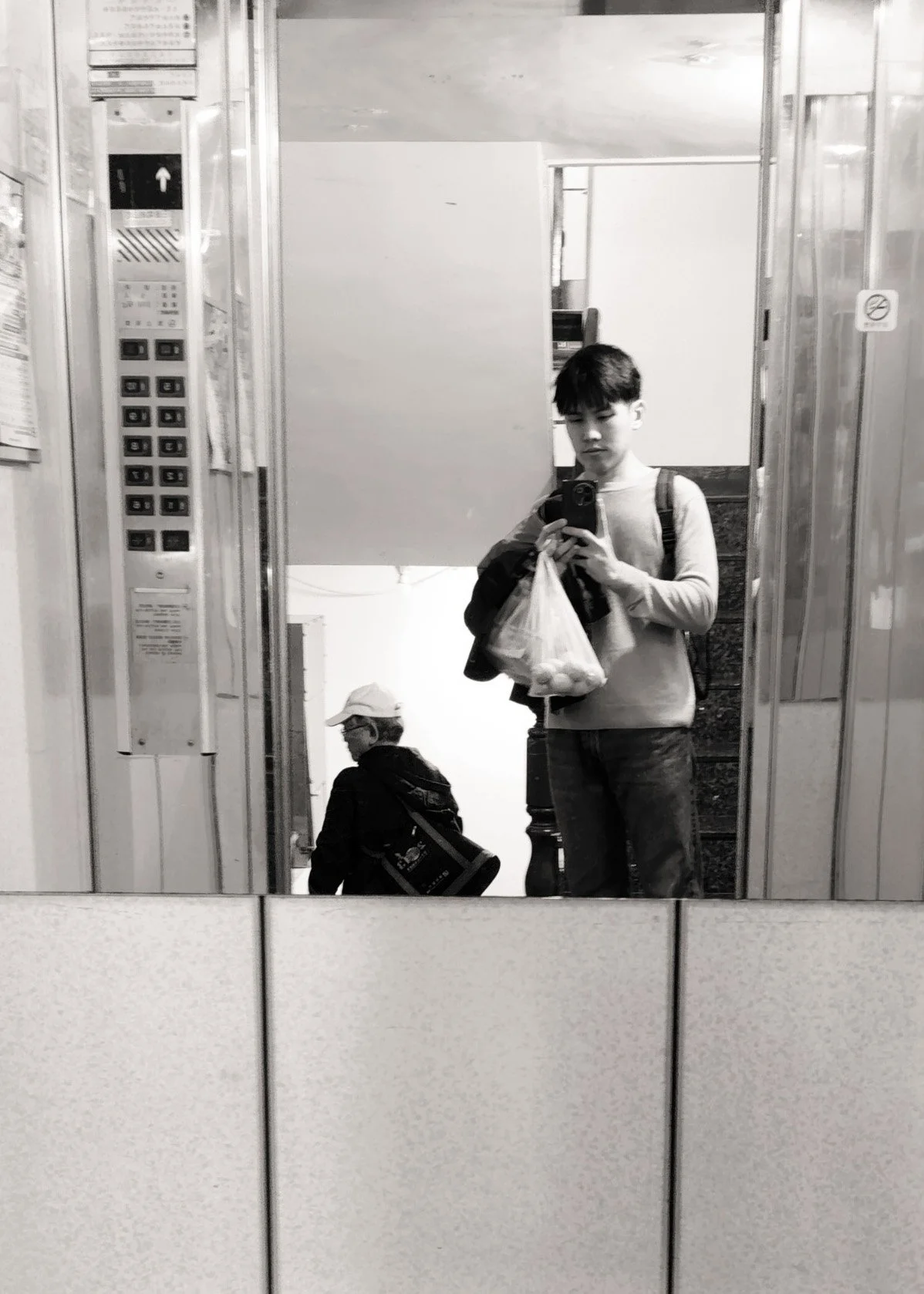
Recently, I set aside two weeks to live and work with an 80-year-old master tailor in Taipei.
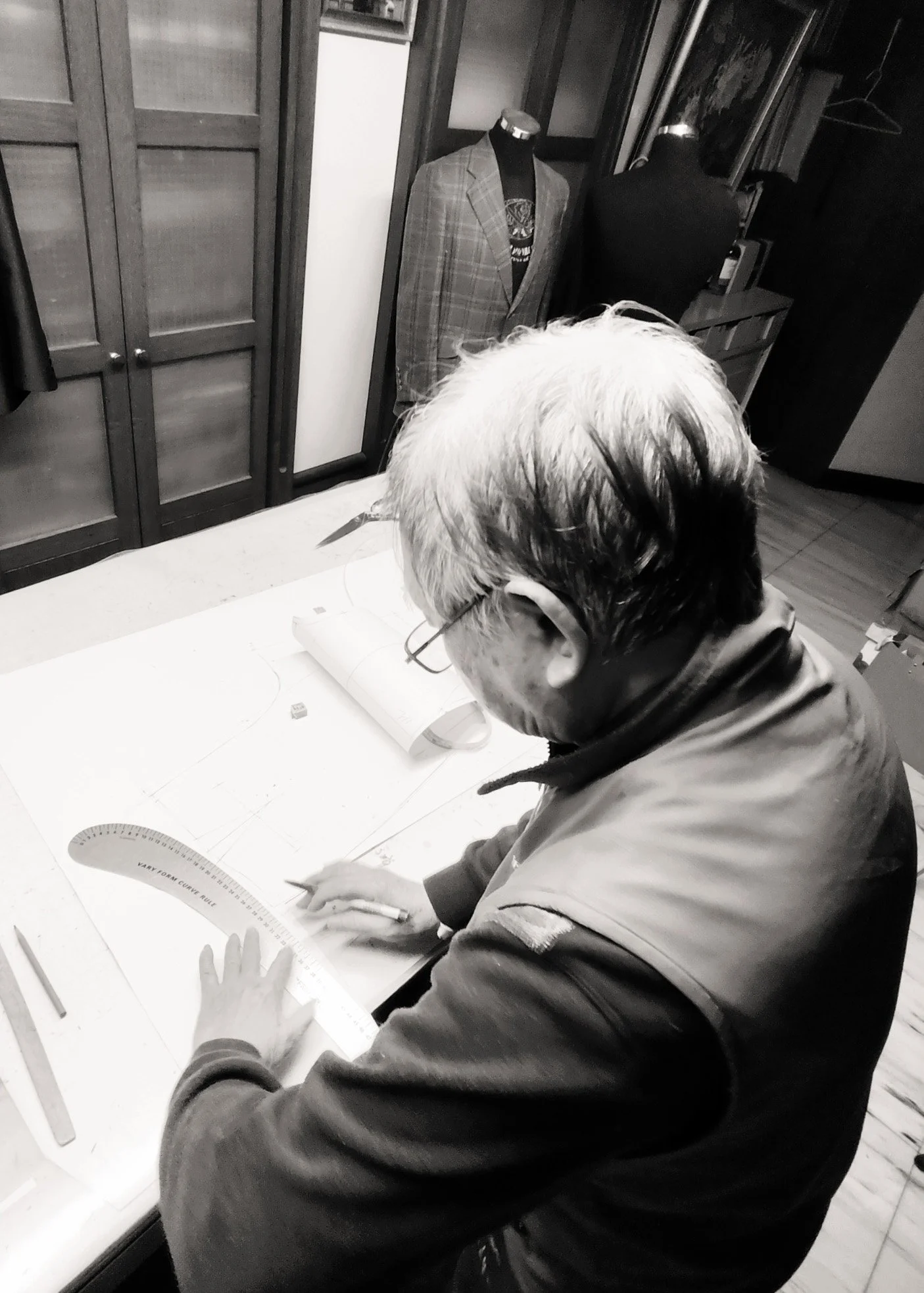
His workshop sits quietly above the noise of the city. Inside, time moves at a different pace. Chalk glides across cloth with calm certainty, shears open and close with measured rhythm, and every movement reflects decades of accumulated knowledge.
The old tailor lives almost like a hermit. For most of his adult life, the world beyond his workbench has been secondary to cloth, needle, iron, and pattern.
Watching him work feels like stepping into an era where patience is assumed, and mastery is measured not only in years, but also in the amount attention and dedication to achieving quality completion.
I travelled to Taipei with a clear intention, to stay true to my principle of upholding a lifelong dedication towards the craft.
One philosophy that I hold firmly is this: each of my new creation must be better than the last.
But this naturally raises an important question.
What does “better” truly mean?
To answer that honestly, we must first become our own most demanding critics. Only by recognising the weaknesses and flaws within our work can we begin to improve upon them.
That requires a lifelong commitment to exploration, constantly seeking for answers to the questions living within our imperfections.
From the heart of London to the outskirts of Naples, the pursuit of “better” has taken me across continents. And now, it brought me to Taipei.
During these fourteen days, I had the rare opportunity to observe tailoring through the eyes of a man who has devoted his entire life to the craft.
But the journey also revealed something deeper.
I began to understand that perfection itself can be understood in two very different ways.
One interpretation encourages constant refinement and progress. The other quietly invites complacency, convincing us that the summit has already been reached.
Depending on how we choose to view our own work, the idea of perfection can either propel us forward or gently pull us backward.
While learning from the master tailor, I also questioned the knowledge placed before me. Every technique and theory was examined carefully, for no one is truly perfect. Those that proved valuable were absorbed into my practice. Others, being the ideas and rationale I may not fully agree with were placed into a “quarantine zone” at the back of my mind.
In doing so, the journey deepened not only my technical understanding, but also my relationship with the idea of perfection itself.
Therefore, what follows are the principles I impose upon myself and also love to share with you, the quiet reminders that consistently shape my approach to a better craft.



1. Perfection Is the Peak That Is Never Reached
Perfection is the peak that is never truly reached.
Like many craftsmen, I have what might be described as an unhealthy obsession with pursuing it. I use the word unhealthy deliberately, because the pursuit can easily consume us and our optimism.
Perfection is an elusive summit that forever appears just within reach. Each time we fall short (and we inevitably will), it becomes tempting to judge ourselves too harshly.
Yet over time I have come to believe something different.
The act of continuing the pursuit with sincerity, care, and discipline is already a quiet form of perfection. A perfection of spirit.
Because the moment we declare perfection achieved is the moment growth begins to slow. In a craft defined by refinement and evolution, that declaration marks not the summit, but the beginning of descent.
Over the years of making, learning, and unlearning, I have developed a small set of guiding principles. They are not rigid doctrines, but touchstones that keep me grounded through both triumph and disappointment.
They are also the ideas I openly share in conversations with friends, clients and students whom I have the privilege of working with.
2. Begin Every Project With the Intention to Create Your Best Work Yet
There is an old saying:
Shoot for the stars, and even if you miss, you will land on the moon.
The attitude we bring into a project quietly shapes its outcome.
When the objective is merely to finish the work and call it a day, the result often feels flat (like a pita wrap without fillings), but lacking a determined spirit.
But when the intention is to create something meaningful, something better than anything we have done before, the entire process changes.
That intention sharpens attention. It encourages patience and care.
This is why I would encourage myself to begin with bold intention. Even if they fall short of their highest ambitions, they will still land far beyond mediocrity.
3. Be an Honest Critic of Your Own Work
Call a spade a spade.
Recognise your mistakes for what they are, lessons waiting to be understood.
When I first began, I often softened the truth. Imperfections were dismissed. Excuses were easy to find. Sometimes I blamed the cloth, sometimes the tools, and often times; the client’s physique.
In reality, I was protecting my pride.
But that mindset quietly limited my progress.
Real growth began only when I started confronting flaws honestly.
When we acknowledge mistakes without disguise, we regain the ability to improve them.
In many ways, this simple act of honesty lies at the heart of craftsmanship.
4. Practice Transparency With Your Clients
There is a difference between earning money from clients and building something far more meaningful, and that is a relationship built on trust and mutual respect.
In bespoke tailoring, the process is deeply personal.
Every garment tells a story not only of cloth and construction, but of collaboration and the client’s trust.
Clients deserve to understand that process. They should be able to appreciate both the beauty of what has been created and the areas where refinement is still possible.
That level of transparency requires humility, but it builds something invaluable: trust.
Many of the relationships I have formed and developed with clients over the years (all of whom I am grateful to for their support of my passion) have grown from this philosophy.
I attribute much of The Cutting Room’s growth to this simple commitment to openness.
5. The Honey Is in a Pot Called Humility
I once believed progress would feel like a steady climb.
In truth, it often feels more like stumbling forward in the dark.
Setbacks are inevitable. Yet every setback carries an important message: it means you have tried, experimented, and moved forward.
Humility is what transforms those stumbles into progress. While ego convinced me I’ve never failed, only that the stars were always against me.
Practicing a healthy dose of humility keeps us receptive to criticism, eager to learn, and willing to refine our work.
Craftsmanship has no finish line. There is only the next fabric to cut, the next garment to make, and the next opportunity to do better.
6. You Are Your Only Adversary
Ultimately, this journey is not about surpassing others.
It is about surpassing the person you were yesterday.
There is no race and no scoreboard, only you, your tools, and your willingness to return to the bench again and again.
If you can do that with honesty, intention, and humility, you may already have sniffed the edge of perfection.
7. Give Yourself a Pat on the Back
If the final result turns out well, allow yourself a moment to smile.
If it falls short of your expectations, smile as well. Because recognising the flaws in your work means the next creation is already moving in the right direction.
For many years I was deeply dissatisfied with my own work. Unsurprisingly, that made me a less happier craftsman than I am today.
The more frustrated I became, the less joy I found in the process.
Disappointment is inevitable in this craft. When it arrives, it helps to remember that we chose this path willingly.
Perfection is neither a destination nor a trophy. It is something that stays just out of reach, quietly encouraging us forward.
Perhaps one day we may catch it.
Until then, we keep walking.
Looking back at all the opportunities I’ve been granted with, I’ll always have to thankthe universe for the fortunate alignment of circumstances, and to the generosity of the old Taiwanese master tailor for helping me fulfil my learning objectives during my two weeks in Taipei.
I now return to the workbench with renewed perspective and a deeper commitment to doing better with every piece.
At The Cutting Room, the desire to improve with each creation goes far beyond mere words. It is a promise, one that must be proven through action and sustained through passion.
To the friends and clients who have supported my work throughout the years, you will always have my sincere gratitude.
This journal entry is dedicated to my masters, friends, clients and anyone who read this.
And as long as there is cloth on the table and chalk in hand, the pursuit of better continues.
*Do stay tune and look forward to a comparison article between two jackets with different styles; one of The Cutting Room, and one with Taiwanese influence.
Sincerely,
Alexander K
