
Jacket and Suit Fabrics for Warm Weather
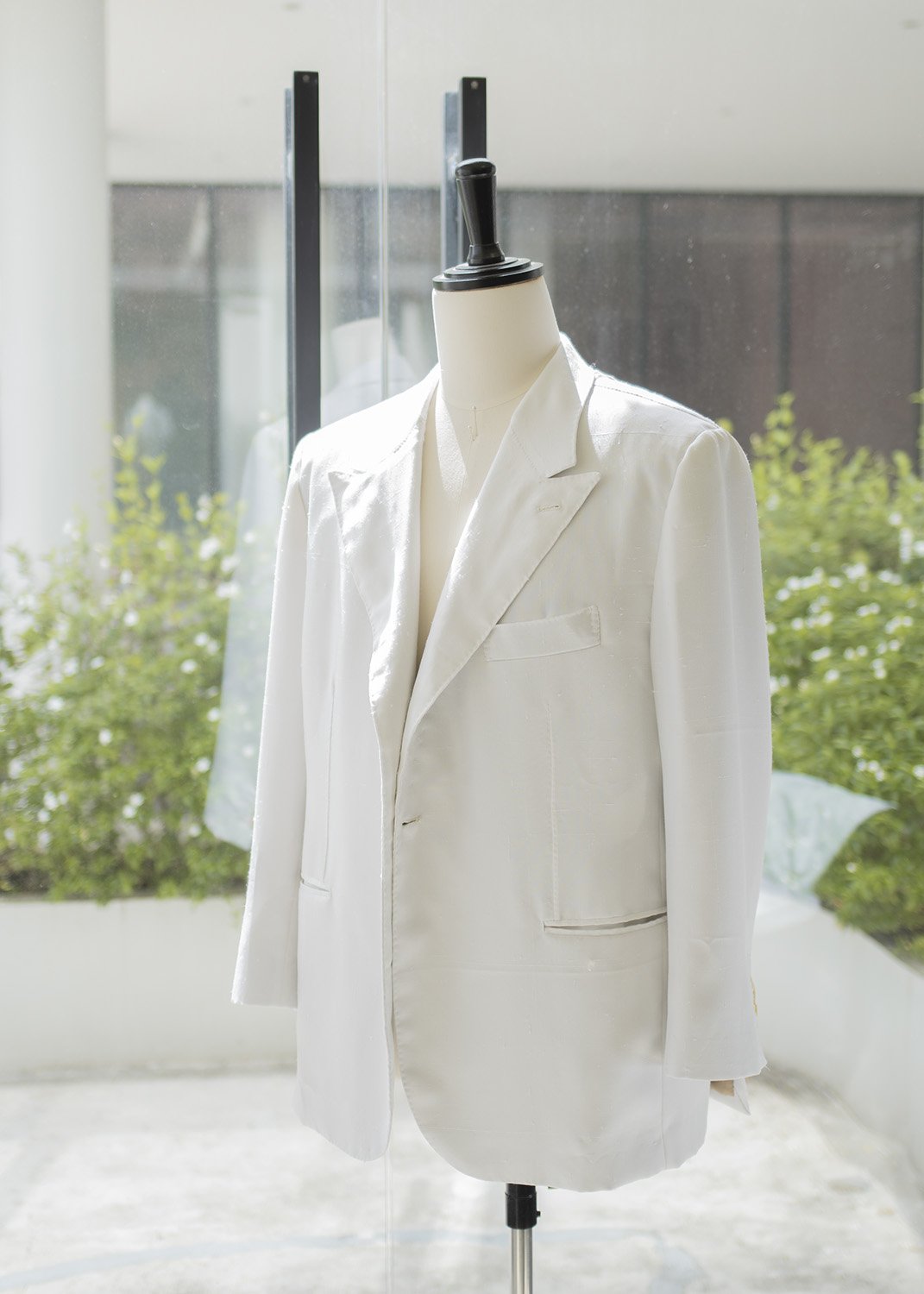
The Cutting Room 1982 Pure Silk Jacket, Bespoke by Alexander K (approx 260g).
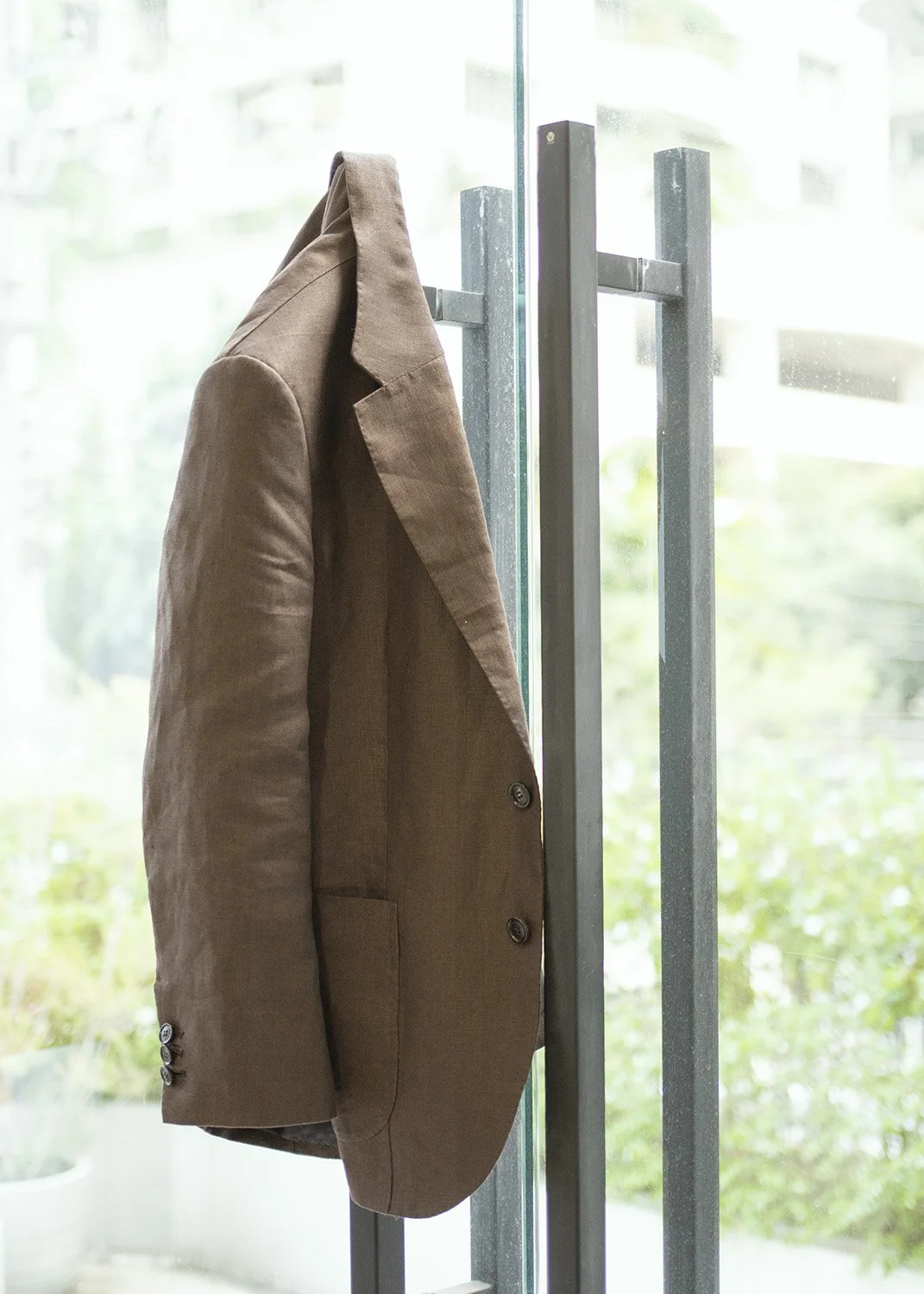
The Cutting Room 1982 Standard Bespoke pure cotton jacket (approx 270gsm).
Sweating under the tropical sun is a lifelong inconvenience, especially for those who enjoy taking their tailored garments out on the town.
Every menswear enthusiast living in warmer climates has likely asked the same question: “How do I stay stylish under the summer heat?”
It’s a dilemma familiar to many who love to dress well but are often discouraged by unforgiving weather. Fortunately, there are elegant solutions. The secret lies in three key elements: fabric, construction, and styling.
When wearing a jacket in hot weather, the first consideration is always fabric. Lightweight materials (ideally under 290g) help you move freely without being weighed down, yet still offer enough body to maintain shape. A jacket made from 210-gram cloth, for instance, feels wonderfully light and comfortable in exchange for loss of structure. I’ve previously tested a jacket made from 210g Escorial wool, which was delightfully comfortable, though less formal in form. I’ve shared my sentiments in a separate article.
Beyond weight, the weave determines how well air circulates through the fabric. A tightly woven cavalry twill traps more heat, while an open hopsack weave allows for greater breathability and comfort.
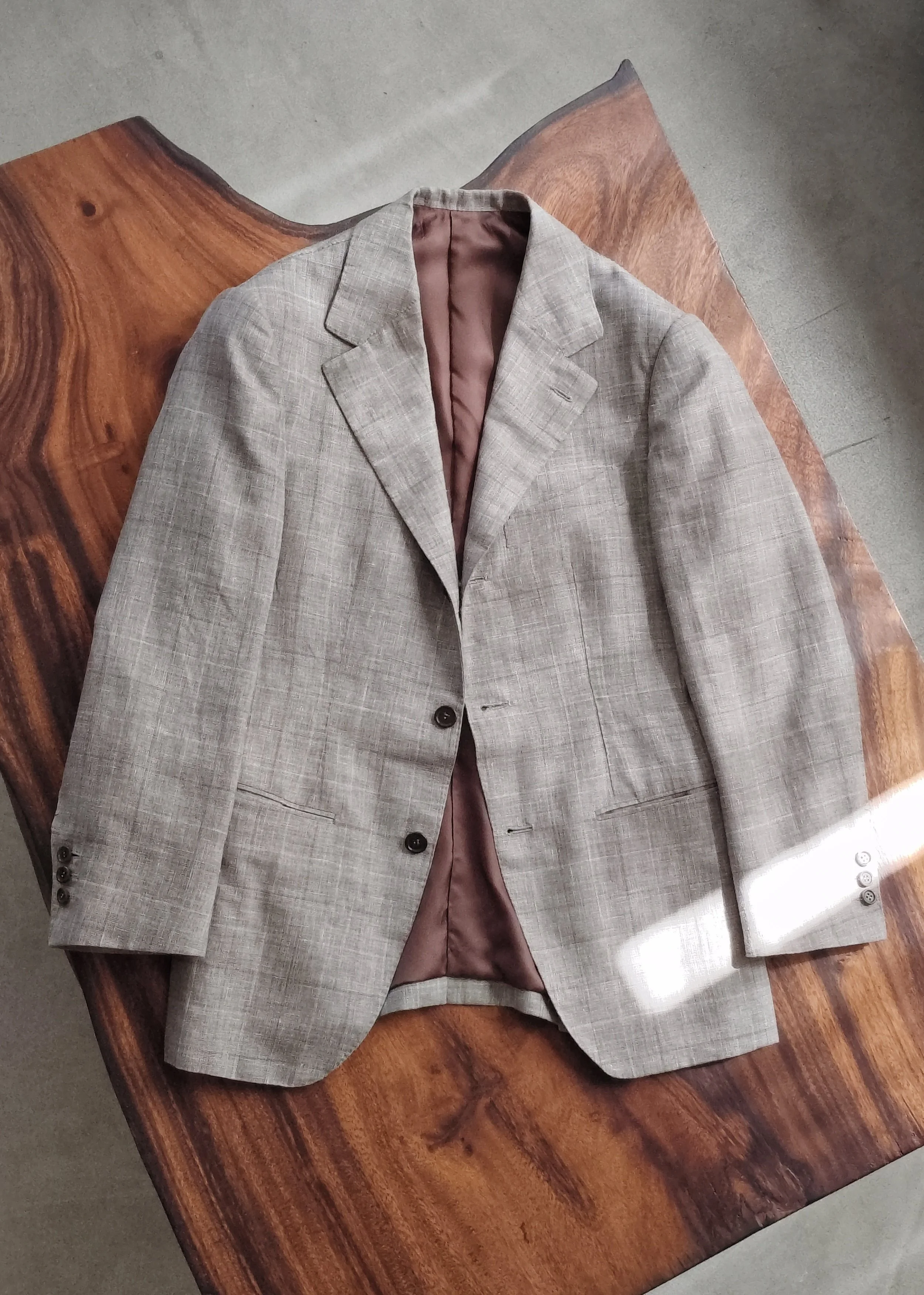
The Cutting Room 1982 Standard Bespoke jacket constructed with Wool, Silk and Linen fabric (approx 240g).
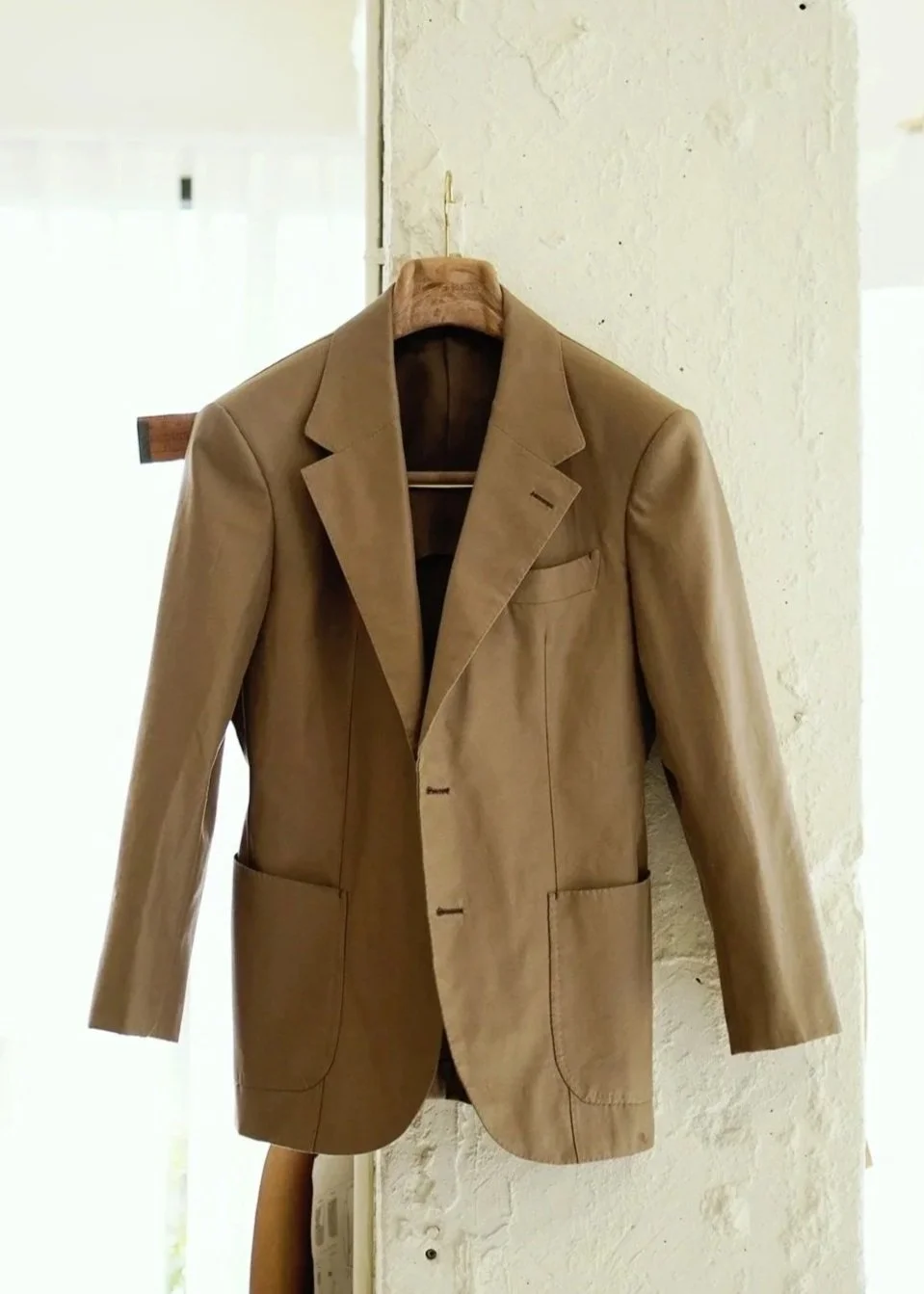
The Cutting Room 1982 Standard Bespoke pure cotton jacket (approx 320g).
Linen has long been a summer favourite, and rightly so. Its open weave promotes airflow, while its soft creasing lends a natural, effortless charm. Some embrace those creases as part of linen’s character; others seek a smoother impression. In that case, linen blended with silk or wool provides an elegant compromise; breathable yet refined, relaxed yet poised. A jacket made in either full linen, or linen-wool-silk blend around 300 to 330 grams works beautifully for half-lined jackets, allowing air to flow through while retaining structure. For those prone to perspiration, the comfort of a half-lining makes an immediate difference. Even though we’ve discussed how lighter fabrics weight may invite less structure, Loro Piana’s range of summer fabrics with linen-wool-silk composition does seem to offer it’s wearer the best of both worlds (lightweight, and yet maintaining beautiful structure).
The same applies to shirting. Linen shirts are perfect for tropical climates, exceptionally breathable and absorbent. While they inevitably crease as the day goes on, the comfort they offer far outweighs that minor imperfection. True style, after all, is not defined by rigidity but by ease.
For those who prefer wool, high-twist fabrics (often referred to as Fresco) make an excellent warm-weather choice. A quick search on the internet would suggest that the word ‘Fresco’ fabric, is a trademarked term is derived from the Italian word for “fresh,” Good to know, but not as important as choosing the right fabric to thrive in summer heat!
Choosing fabrics woven from tightly twisted yarns that create a dense yet breathable structure will always be the most practical direction when it comes to jackets or suits in summer. Collections such as Huddersfield Worsted’s Fresco Lite, Standeven’s Explorer, and Holland & Sherry’s Crispaire are among the highly recommended examples. These high-twist wools drape beautifully, resist wrinkles, and maintain shape even in half-lined constructions, offering a refined alternative to linen.
Mohair-wool blends are another reliable companion in the heat. Mohair, the lustrous fibre from the Angora goat, has an extraordinary ability to regulate temperature; a gift of nature from the South African highlands where the goats endure both heat and chill. Its slight sheen, however, exudes an air of formality, the kind I would reserve for tuxedos. Still, I intend to explore this cloth further when I have cut and made a mohair jacket of my own, to better understand its character through experience.
Cotton, too, deserves its place in summer wardrobes. Like linen, it’s a natural fibre that breathes well, though its weave makes it slightly less airy. Cotton suiting cloths tend to offer inherent structure, making them ideal for half-lined or even unlined jackets. It’s worth noting that cotton shirting and cotton jacketing fabrics behave quite differently; the former soft and light, the latter crisp and firm. Both, however, provide a grounded sense of casual elegance. That being said, I will still pick an open-weave linen jacket over a cotton jacket on any other tropical day.
Construction plays a crucial role in staying comfortable. A half-lined jacket is highly recommended for summer tailoring, allowing air to circulate freely, while an unlined jacket maximises ventilation. That said, extremely lightweight fabrics can appear too soft without sufficient support. Personally, I find 290 grams the lower limit for maintaining a graceful drape in half-lined or unlined tailoring.
Let’s have a quick quiz! Which of the four jackets featured in this article do you think will serve its wearer best in tropical heat? I don’t think it’ll be the cotton jacket, and will most certainly put my money on the silk jacket given the fact it is white in color as well.
Staying and keeping cool can be summed up in three words: simple, lesser and lighter. When the sun glares overhead, reach for a Panama hat or aviator sunglasses to shield yourself in style, and finish the look with a pair of loafers for understated charm. I’m simply throwing out ideas, but let’s leave the accessories to their respective experts. Just remember, the order of priority (at least in my opinion) for considering summer jackets or suits would be: Weave —> Construct —> Weight.
Dressing well in warm climates is definitely possible, and certainly a pleasure. With the right choices, comfort and elegance need not compete. Even under the fiercest sun, true style remains (subjectively) unruffled.
